
Background
A. Company History
A. COMPANY HISTORY
Final construction of the abattoir was completed in 1938 and the abattoir was expanded and upgraded in 1960. In the year 2000, seven farmers saw the potential of the company and went through many obstacles to obtain the company. On the 11th of September 2000 the company opened its doors under the name Vryburg Abattoir.
They started the abattoir employing ±50 people and was registered to slaughter 99 cattle per day.
During 2004 a deboning plant opened. We expanded the abattoir to slaughter 400 cattle per day.
We registered at Witwatersrand Muslim Butchers Association .
An independent company, IMQAS, handles classification and meat inspection services on our meat. The classifiers and examiners are tested on a monthly basis by SAMIC.
Currently we upgraded the abattoir to be FSSC 22000 certified.
B. WHAT WE DO
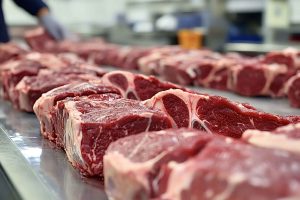
Buying, slaughtering, deboning and packing of meat and offal products. We also focus to continually enhance the reputation of our brand and to maintain customer and consumer confidence in our products. We do Microbiological Hygiene Monitoring with Envirocare labs ofthe following:
- Meat [90 days shelf life]
- Offal [365 days shelf life]
- Antibiotics
- Water –microbiological SANS 241:2015
- Water –heavy metals
- Surface
- Hand
- Drains, cold rooms, and the dispatch area
VISION & STRATEGY
A. VISION STATEMENT
Vryburg Abattoir is committed to continuous improvement.
Passionately – All the employees along with management is passionate about empowering our people. Empowering – Instead of hiring people from outside the company, we empower the workers via training.
People – We are all about people. We believe that the responsibility for achieving food safety and quality commitment lies with all the staff of Vryburg Abattoir in the execution of their jobs and their relationship with managers and directors.
Product – That the processes, slaughtering, deboning, packing and delivery processes meet the food safety and quality standards. Ensure sustainable food safety and quality performance through the implementation and certification of an effective food safety management. Validate the effectiveness of the food safety and quality system through the internal and external audit. Build food safety and quality capability through structured programs that develop technical skills, increase awareness, manage risk and drive increasing levels of excellence. Continually review food safety policies, standards and procedures to effectively manage food safety risks associated with changes in products, processes and technologies. Ensure that all suppliers and contractors embrace the same food safety and quality commitments, and monitor the materials and services they supply through audits and incoming goods inspections. Communicate food safety aspects and requirements to suppliers, contractors, customers and consumers by establishing and reviewing specifications for ingredients and packing materials, product storage, customer and consumer guidelines.
B. MISSION STATEMENT
consumers.
C. VALUES
We focus on being the best in everything we do.
Pro-active
We aim to meet all statutory regulations for food safety and quality
D. BUSINESS GOALS & OBJECTIVES
To ensure sustainable food safety of the Management Team and to implement a food safety
management system compliant with the ISO 22 000:2018, ISO/TS 22 002-1:2009 & Additional
FSSC 22 000. The system will be audited and certified by a certification body recognised by
the International Standards Organisation.
E. GROWTH STRATEGY
Our growth strategy is about our product. Through marketing we can grow internal and external. External, to expand our products to more customers or consumers.
External growth will boost internal growth, to employ more people.
3. Products & Services
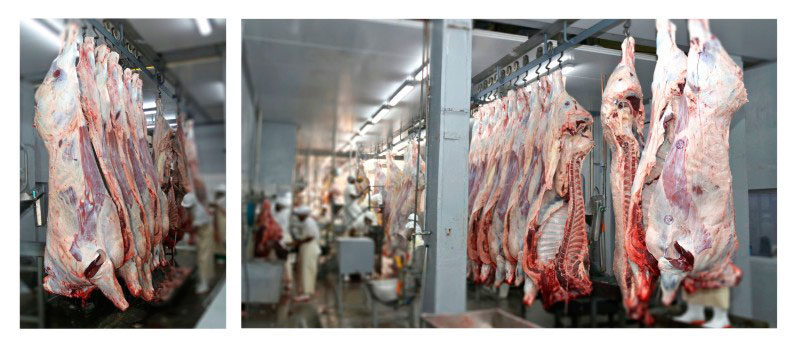
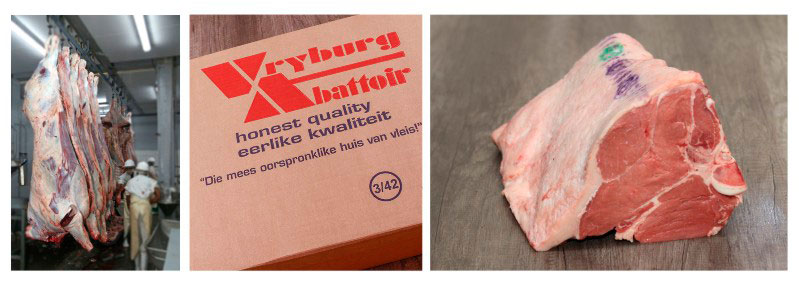
We plan and carry out the slaughtering, deboning and packing processes under controlled conditions, which include: The use of suitable manufacturing equipment. The availability of procedures and work instructions at each operating facility that describe the characteristics of the product. The availability and use of monitoring and measuring devices.
Where appropriate Vryburg Abattoir identifies the product by suitable means throughout the slaughtering, deboning and packing processes. This includes identification of the product status with respect to monitoring and measurement requirements. Traceability of food products is a requirement and Vryburg Abattoir controls and records each unique product identification.
In accordance with the appropriate procedures, Vryburg Abattoir ensures that products who do not comply to requirements, are identified and controlled to prevent unintended use or delivery to the customer. We monitor and measure the characteristics of the product of the process to verify that requirements for the product have been met. This is carried out at appropriate stages of the process in accordance with the applicable procedures and work instructions at the operating facilities. Evidence of conformity with acceptance criteria is maintained.
We determine, collect and analyse appropriate data to demonstrate the suitability and effectiveness of the food safety management system and to evaluate where continual improvement of the food safety management system can be made.
This includes data generation of results of monitoring and measurement.